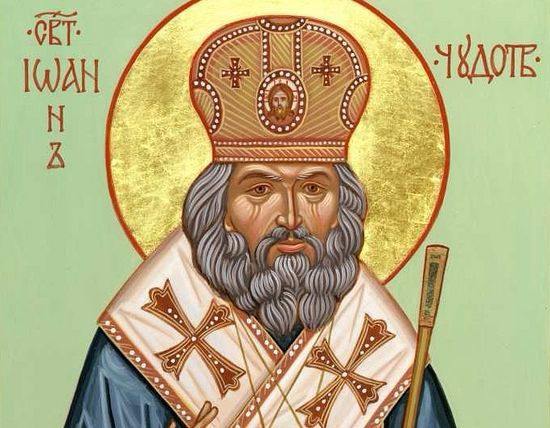
It may be observed that a living ecclesiological and soteriological understanding of the Eucharist often conflicts with established practice: infrequent communion, departing after the Paschal Matins before the sacrament (which, in the hierarch's view, renders meaningless not only the Pascha itself, but the entire preparatory Great Lent — see 19), and the reduction of communion to individual, often mundane needs (health, prosperity, and the like). To this, St. John uncompromisingly opposes the lofty purpose of communion: it not only sanctifies but strengthens and transforms the person, opening to him the vision of Christ's glory, through whom he is united to the fullness of the Godhead. In the communion of the holy Mysteries, which introduces believers into eternal life and is a pledge of their future communion with Christ, the Church is also realized — as the new, otherworldly assembly of her members united in “the great Body of Christ.” St. John insists that one communes worthily when, having received this gift, he responds with his yearning toward the Lord, even to the point of self-denial.
The quotations are gathered from various homilies (none devoted specifically to the Mystery of Communion) and have been furnished with headings for convenience.
1. The Mystery of Communion was established by the Lord at the Last Supper.
The bread and wine are transformed into the Body and Blood of Christ at the Divine Liturgy, and the faithful commune of them. So Christ Himself established it, having communed His apostles at the Last Supper with the words: “Take, eat: this is my body… Drink ye all of it; for this is my blood of the new testament” (Matt. 26:26–28).
2. Communion is a liturgical commemoration of the Last Supper.
On Great Thursday the Lord celebrates the Last Supper, and the liturgy of that day vividly reminds us that, communing the Holy Mysteries with reverence, we taste the Body and Blood of Christ together with the apostles. Those who commune unworthily are like Judas. Let everyone strive to commune, sincerely repenting of sins, and receive mercy from the Lord.
3. Communion sanctifies the person.
For the complete sanctification of man, the body of the Lord's servant must be united with the Body of Christ, and this is accomplished in the sacrament of Holy Communion.
4. Communion is a source of tenderness and spiritual warmth.
Even now Christ grants us to taste the joy and sweetness of His Goodness. He strengthens our souls and bodies with His Divine Mysteries… Sometimes He fills us with inexpressible tenderness and spiritual warmth after reverent communion of His holy Mysteries.
5. Communion is the beginning of paradise on earth.
The beginning of hell is already here on earth. Likewise, paradise begins in the soul of man already in earthly life. Here occur touches of the Divine on the day of Bright Resurrection, and when we commune worthily.
6. Communion unites us with the fullness of the Godhead and eternal life.
Being united with the Risen Lord and through Him with the Ever-Living Trinity, man draws from it the strength for eternal life and himself becomes immortal.
7. Through communion and the cooperation of one's own good will, man becomes a new creation.
Not only the soul but also the body of man is sanctified and united with God in the communion of the Body and Blood of Christ, through whom he is joined with the entire Holy Trinity. By God's grace, through the participation of one's own will and effort, man becomes a new creature, a participant in the eternal Kingdom of God.
8. The worthy communicant, ready to serve the Lord, becomes an instrument of the Divine will.
Those who commune with reverence, love, and readiness to offer themselves in His service are closely united with Him and become instruments of His Divine will.
9. Communion is victory over sin and death.
The communion of the Body and Blood of Christ is the reception within oneself of the Risen Christ, the Victor over death, granting to those with Him victory over sin and death.
10. Communion is the foretaste of eternal life.
Preserving within ourselves the grace-filled gift of Communion, we have a pledge and foretaste of the eternal, blessed life of soul and body.
11. Communion is a source of eternal joy and the vision of the glory of the Risen Christ.
He who has been united in spirit and body with Christ in this life will be with Him in spirit and body in the life to come. The grace-filled streams of the Life-giving Mysteries of the Body and Blood of Christ are the source of our eternal joy in communion with the Risen Christ and in the vision of His Glory.
12. Through communion the believer becomes a member of the great Body of Christ, which is the Church.
The true Body and true Blood of Christ, which we have received, become part of the great Body of Christ.
We commune of the Body and Blood of Christ (in the holy Mysteries) so that we ourselves might be members of the Body of Christ (the Church).
The Divine Eucharist, the offering of the bloodless sacrifice and communion in it, sanctifies and strengthens its participants, making those who taste the Body and Blood of Christ true members of His Body, the Church.
13. The salvation of people through kinship with the Divine life of the Body of Christ is the purpose of the Church.
All parts of the Universal Church have one common aim — the proclamation of God's Word and the preparation of people so that they become capable of being members of the Body of Christ, and, having become such, increasingly and more deeply grow into kinship with the Divine saving life of the Body of Christ, for therein lies the salvation of mankind.
14. The Church herself is a eucharistic unity of believers.
According to the Orthodox understanding, the Church is constituted not only by hierarchs and clergy, but by all the believing Orthodox people. Their totality and unity, partaking of the holy Mysteries of Christ, is the Church, the Body of Christ.
15. Why it is necessary to commune continually.
Through repentance, the Christian is cleansed and united most closely with Christ in the communion of the holy Mysteries, but then the dust of sin again settles upon him and separates him from Christ and the Church, wherefore repentance and communion are again needed.
As long as man's earthly life has not ended, until the very departure of the soul from the body, the struggle between sin and righteousness continues within him. No matter how high a spiritual and moral state one may achieve, a gradual or even sudden, deep fall into the abyss of sin is possible for him. Therefore, communion of the holy Body and Blood of Christ is necessary for each, strengthening our communion with Him and refreshing us with the life-giving streams of the grace of the Holy Spirit flowing throughout the Body of the Church. How important the communion of the holy Mysteries is shown by the life of St. Theodosius the Great, to whom, as to other hermits dwelling in the desert, angels brought holy Communion; of St. Mary of Egypt, whose ultimate desire, after many years of desert life, was to receive the holy Mysteries; of St. Sabbatius of Solovki, and many others. Not in vain did the Lord say: “Verily, verily, I say unto you, Except ye eat the flesh of the Son of man, and drink his blood, ye have no life in you” (John 6:53).
16. The frequency of communion is a pledge of communion with Christ in the coming Kingdom.
The more a person remains under the action of the grace of communion and is more closely united with Christ, the more he will enjoy communion with Christ in His coming Kingdom.
17. As we partake of the Body of Christ, let us turn to Him spiritually.
The Church of Christ is the Body of Christ; He Himself is its Head and with His Divine Body and Blood nourishes the believing, nourishes the children of His Church, so that we are one with Christ both bodily and spiritually. We are united bodily with Christ through Divine Communion; we must also cleave to Him spiritually and faithfully follow His commandments.
Of course, for union with Christ it is not sufficient merely that our body be united with the Body of Christ. The tasting of the Body of Christ is beneficial when we turn to Him in spirit and are united with Him. The reception of the Body of Christ, when turning away from Him in spirit, is like the touching of Christ by those who beat Him, struck Him, and crucified Him. Their touching of Him did not serve them for salvation and healing, but for condemnation.
18. Concerning communion in the coming Kingdom.
In the coming Kingdom of Christ there will no longer be need for the communion of the Body and Blood of Christ, for all who have been deemed worthy will be in the closest communion with Him and will enjoy the eternal light of the Life-creating Trinity, experiencing bliss inexpressible in words and incomprehensible to our weak minds. Therefore, after the communion of the holy Mysteries of Christ at the Liturgy, in the altar there is always sung the prayer recited on Paschal days: “O great Pascha and most holy Christ! O Wisdom and Word of God and Power! Grant us more truly to partake of Thee in the never-ending day of Thy Kingdom.”
19. Concerning communion at Pascha.
What a most precious gift of God do we receive then, which is the culmination of our fasting labor? Of this the very first hymn speaks to us, which begins the daily singing of the stichera of the fast: “And given to us as food is the Lamb of God, in the sacred and radiant night of the Resurrection, brought to the slaughter for our sake, made known to the disciples in the evening of the mystery.”
The communion of the Body and Blood of the Risen Christ unto eternal life — this is the aim of the holy Forty Days. One did not commune only on Pascha. On the contrary, on Pascha those should commune who kept the fast, made confession, and communed during the Great Lent. Before Pascha itself it is not possible to make a thorough confession in all matters; the time and the priests are occupied with the Passion services. One must prepare for this beforehand.
Every communion of the Mysteries of Christ is a union with Christ Himself and is saving for us. Why, then, is such significance given to communion on the night of Holy Pascha, and we are all called to it? Especially then is the Kingdom of Christ given us to feel. Especially then are we illumined by the Eternal Light and strengthened for the ascent of the spirit.
This is an irreplaceable gift of Christ, an incomparable good. Let no one deprive himself of this joy, and, instead of communing on the Paschal night, hurry to taste meat and other foods. Communion then of the holy Mysteries prepares us for the feast in the eternal Kingdom of God.
The Lamb of God is consumed by us in the sacred and radiant night of the Resurrection. We pray for this even as we begin to prepare for the fast, and then repeatedly throughout the Great Lent: that the Lord would deem us worthy to commune on the night of Holy Pascha. Especially does the grace of God act then upon the hearts of men. We commune then of the Risen Christ and become participants in His Resurrection.
The chief thing on the Bright day of Pascha is our communion with the Risen Christ, which is especially manifested in the communion at the Bright Liturgy, for which we make many supplications in the services of the Great Lent. To depart from the Paschal service before the Liturgy is concluded is sin, or a lack of understanding of the Church's service.
If you would like to prepare to receive Holy Communion, please speak with our rector — write to kaydanovart@gmail.com or call +1 (386) 225-6993.